Out on the trail, birding is usually about subtle things. A faint chip note in the understory. A distant raptor kettling on a thermal. The slow reward of patience and attention.
But every guide knows that, occasionally, the focus shifts. Someone slips on wet leaves. A shin meets a rock. A participant quietly mentions they don’t feel quite right. When that happens, you’re no longer just interpreting birds and habitat. You’re responsible for the well-being of the group.
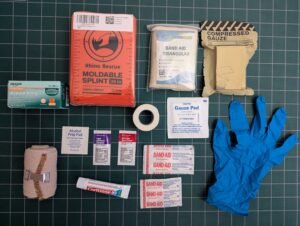
A thoughtfully built field first aid kit, like the one shown here, reflects that reality. It’s not designed to turn you into a medic. It’s designed to help you stabilize, manage, and move forward safely, especially with groups that often skew older and bring a wider range of physical considerations into the field.
Built for the Most Likely Problems
The most common issues on guided outings are not dramatic. They’re slips, trips, minor cuts, and the occasional more serious fall. For many birders over 55, balance, bone density, and skin fragility all factor into how those incidents play out.
At the center of this kit is a moldable splint, a lightweight but invaluable tool. If someone takes a bad fall and you’re dealing with a suspected fracture or a severe sprain, immobilization becomes your priority. A splint like this can be shaped to fit a wrist, forearm, or lower leg, reducing pain and preventing further injury while you plan an exit from the field.
Supporting that are compressed gauze and an elastic bandage. Together, they handle two essential tasks: controlling bleeding and securing whatever stabilization you’ve put in place. Even a relatively small wound can bleed more than expected, particularly in older adults or those on blood thinners. Having the ability to apply firm, sustained pressure matters.
Covering Cuts, Scrapes, and Skin Tears
A large portion of field care is managing minor wounds well enough that the outing can continue safely. This kit includes both sterile gauze pads and a variety of adhesive bandages, which together cover everything from small nicks to more substantial abrasions.
Gauze pads allow you to dress and protect larger or actively bleeding wounds, while adhesive bandages are perfect for quick fixes. On a rocky trail or thorny edge habitat, even experienced birders pick up the occasional scrape.
A roll of medical tape adds flexibility. It lets you secure dressings where standard bandages won’t hold, especially in hot, humid, or sweaty conditions.
Keeping Things Clean and Controlled
Infection prevention begins immediately. The inclusion of alcohol prep pads and antibiotic ointment reflects a simple but effective approach: clean what you can, protect what you can’t.
Alcohol pads are useful for cleaning the area around a wound or your own hands when water isn’t readily available. The antibiotic ointment helps reduce infection risk and keeps wounds from drying out, which can make a surprising difference in comfort over the remainder of a walk.
Small Items, Big Impact
Some of the most appreciated items in a kit are the ones that address discomfort before it becomes a problem.
A small supply of burn cream can help with minor burns from hot surfaces or sun exposure. Hydrocortisone cream is a welcome relief for insect bites, stings, or unexpected encounters with poison ivy.
The inclusion of low-dose aspirin reflects a more serious consideration. While not something you’ll use often, it can be relevant in the early response to suspected cardiac symptoms in an adult participant, a scenario that is not out of place given the demographics of many guided groups.
The Versatility Factor
Few items are as adaptable as a triangular bandage. It can serve as a sling for an injured arm, help secure a splint, or be folded into an improvised dressing. In a compact kit, versatility is everything, and this is one of those tools that earns its space many times over.
Safety for the Guide, Too
A pair of nitrile gloves rounds out the kit. They’re simple, lightweight, and essential. Protecting yourself while assisting someone else is part of responsible field practice, and it also reassures participants that care is being handled properly.
A Kit That Matches the Job
What makes this kit effective is not just what’s in it, but what’s not. It avoids unnecessary bulk while focusing on the problems you are most likely to encounter. It supports the core goal of field care: stabilize the situation, keep the participant comfortable, and get everyone safely back.
For birding and nature guides, preparedness is part of the craft. Just as you learn calls, habitats, and seasonal movements, you also learn to anticipate the needs of the people you’re leading.
Most days, your first aid kit will stay zipped up in your pack, quietly forgotten as the group focuses on warblers, shorebirds, or a distant owl. But on the day you need it, every item inside becomes part of the experience you’re guiding, helping ensure that everyone returns not just with a list of birds, but safely and confidently as well.